
Many of you will be familiar with London’s Kew Gardens, but I am keen to draw attention to the fantastic herbarium (classified collection of preserved plants), and the wonderful botanical library, with its collection of art and archive, which are perhaps less well known. In fact, Kew do not often publicize their extensive library, due to lack of reading space – an issue which will be alleviated by the imminent move of the library to its new building within the new herbarium complex, which will provide more space for holdings, and seating for 30 readers. Anyone with a legitimate reason will be allowed access. Kew does run tours of these lovely collections however – they currently cost 5.00 GBP per person, and you need to book in advance as places are limited to 10 – if you have a couple of hours to spare I urge you to go along.
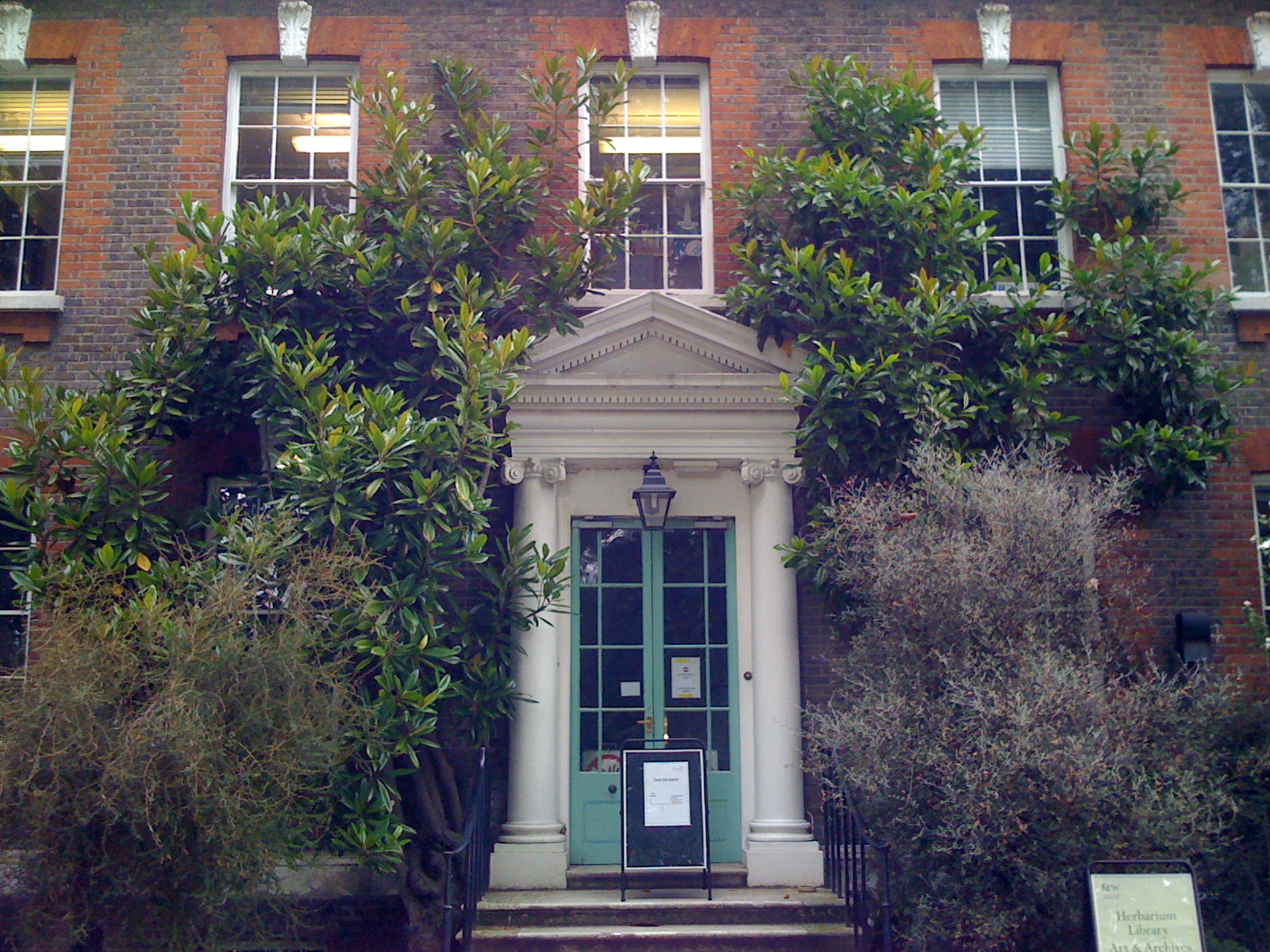
Kew Gardens Hunter House
We began outside Hunter House, where the library began its formal life in 1852, when the Reverend William A. Bromfield bequeathed his herbarium and well-chosen library of about 600 volumes to Kew.

Kew Gardens New Herbarium Complex
Around the corner, is the new herbarium and library complex, which will open soon and provide much needed extra space and facilities. I am always content to know that every collection outgrows its space – not just mine ..
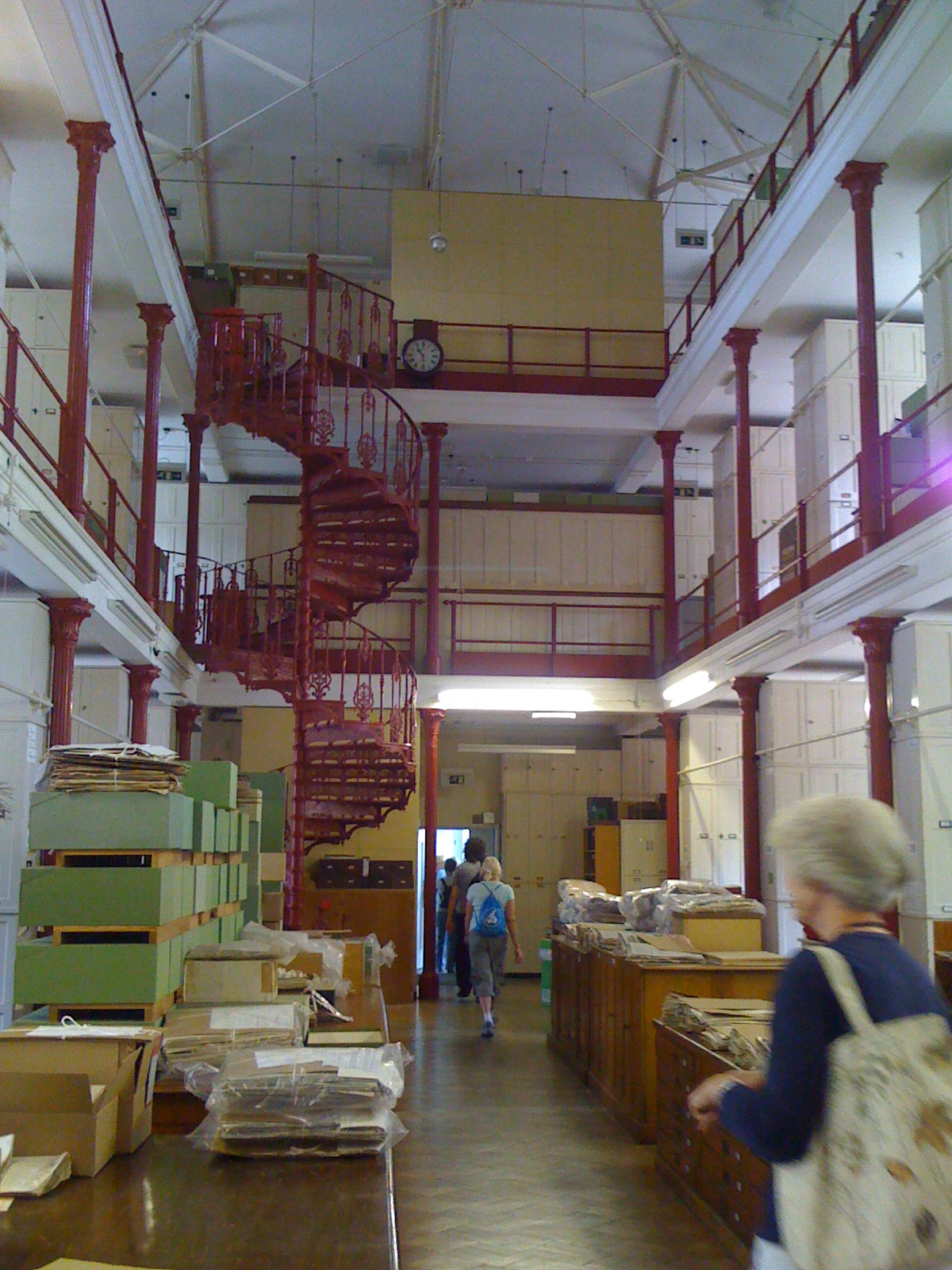
Victorian Herbarium
The new complex is linked in to Hunter House, which was itself extended several times. We wandered through the vast, victorian herbarium (1853), with its fine cabinets and tables, designed to house the 7 million examples of preserved plant and fungi materials. Each specimen is identified, labelled, dried and mounted on card before being stored. Huge piles of examples were lying on tables, waiting to be processed. Specimens not suited to mounting on card are stored in jars of preservative. Of the collection, there are 350,000 “type specimens” – some dating back to the eighteenth century. These are the original specimens on which new species descriptions have been based, and they define the exact species name and provide standards for taxonomy and systematics of plants and fungi. The herbarium contains the collections of many well known scientists, including Charles Darwin and David Livingstone. Around 30,000 new specimens are processed each year. The herbarium supports research, and works with customs specialists to formally identify plant material coming into the UK – one area of expertise is in the identification of plants used in chinese medicine – sometimes, in dried form, it is difficult to be sure what materials really are, and this can have consequences if they are used in medicines of any kind. The Kew Herbarium collection is worldwide, in comparison to other herbaria, where the focus is on a particular type of material or locality.
We moved on to the digitization section – an innocuous room filled with PCs and large scanners. Here a team of around 20 people work on creating the electronic herbarium catalogue, containing high resolution images of the specimens. Each team member aims to create around 100 records each week (image plus data transcribed from original labeling), so the size of the project, supported by the Mellon Foundation, is considerable – with only 7 million to process. … the catalogue can be accessed from Kew’s website by anyone and saves many the need to spend on travel to London (alas for them …). I tried searching for Darwin’s specimens – lovely clear images – and another way to spend hours in cyberspace – and I am not even a botanist …
Then on to the mounting room – here the specimens are laid out and glued down to the card, pressed slightly by sandbags to ensure they stick. The cards are lovely in themselves – reminding me of making collages for the long lost topic of ‘nature studies’ in primary school. When finished, they are sent to the herbarium for storing.

Herbarium – specimens awaiting collection
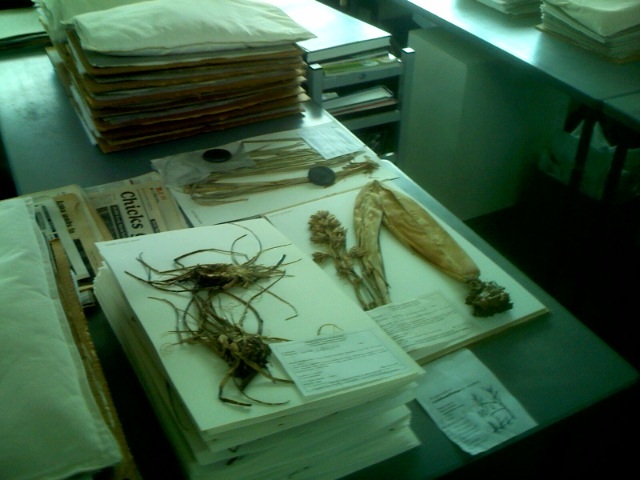
Herbarium – mounting room

Herbarium – finished mounts
And finally to the library, which I mentioned is moving from its current location, which opened in 1969, to the new complex over the summer 2009. The library “contains more than half a million items, including books, botanical illustrations, photographs, letters and manuscripts, periodicals, biographies and maps.” (Kew Library website 13/8/09). There are some lovely things amongst this collection and my images show some of the earliest books, with their hand painted illustrations, (florilegiums). The art of botanical illustration is still alive and thriving, as the human eye captures detail, and regard for the subject, in a way that a camera never can. A modern florilegium of the plants in Highgrove gardens has recently been published at a cost of 11,ooo GBP … there is one in the Kew Library – but I wasn’t allowed to touch it.

Tractatus de Herbis – Ortus sanitatis c1490

Hortus Sanitatis 1491

Letter from Hooker to Darwin 1848
For further reading see: Ward M and Flanagan JF (2003). Portraying plants: illustrations collections at the royal botanic gardens, Kew. Art Libraries Journal 28(2) 22-28.
 Dr Lyn Robinson