Kew Gardens – Herbarium, Library Art and Archive

Many of you will be familiar with London’s Kew Gardens, but I am keen to draw attention to the fantastic herbarium (classified collection of preserved plants), and the wonderful botanical library, with its collection of art and archive, which are perhaps less well known. In fact, Kew do not often publicize their extensive library, due to lack of reading space – an issue which will be alleviated by the imminent move of the library to its new building within the new herbarium complex, which will provide more space for holdings, and seating for 30 readers. Anyone with a legitimate reason will be allowed access. Kew does run tours of these lovely collections however – they currently cost 5.00 GBP per person, and you need to book in advance as places are limited to 10 –  if you have a couple of hours to spare I urge you to go along.
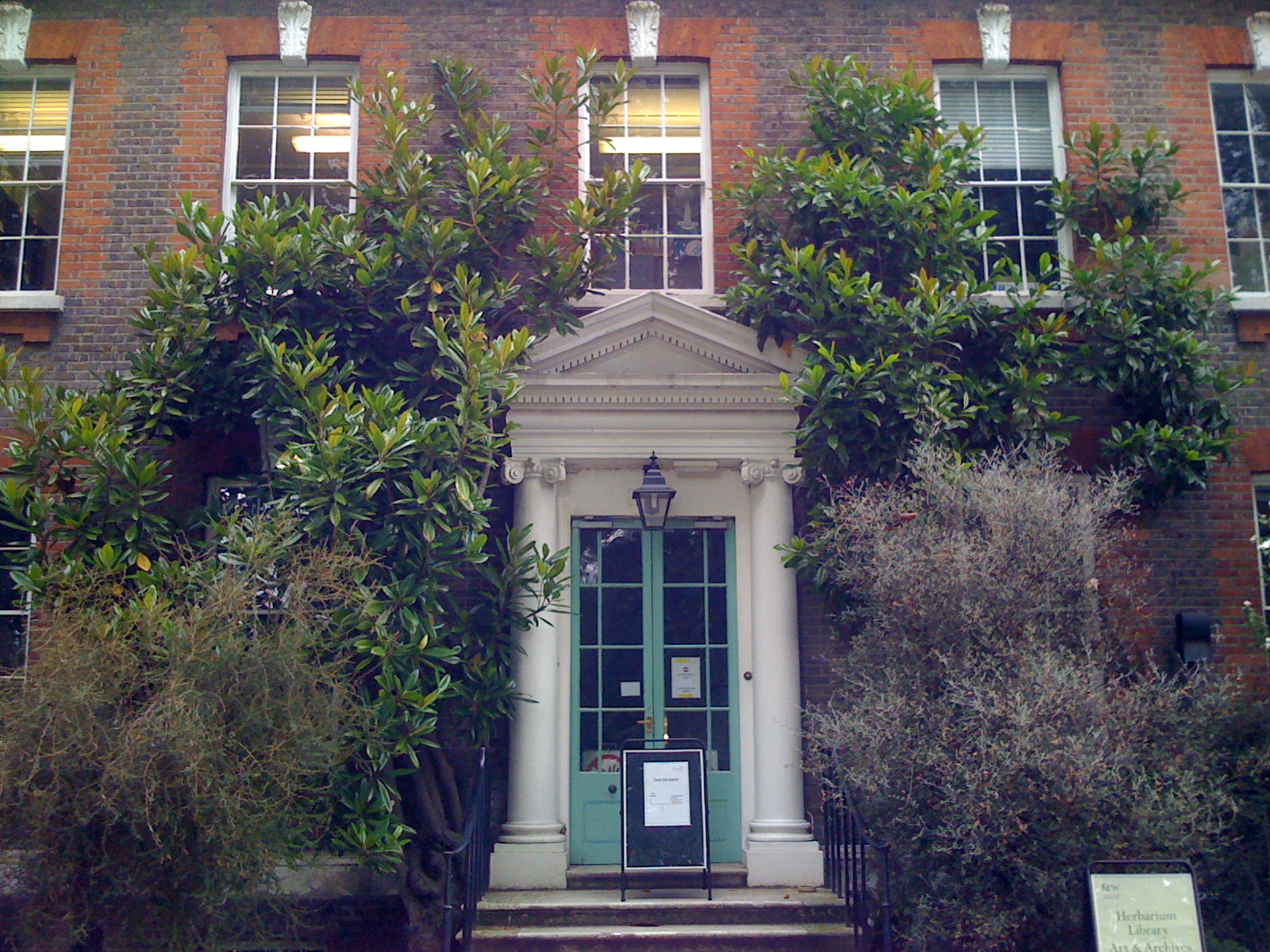
Kew Garden Hunter House

Kew Gardens Hunter House

We began outside Hunter House, where the library began its formal life in 1852, when the Reverend William A. Bromfield bequeathed his herbarium and well-chosen library of about 600 volumes to Kew.

Kew Gardens New Herbarium Complex

Kew Gardens New Herbarium Complex

Around the corner, is the new herbarium and library complex, which will open soon and provide much needed extra space and facilities. I am always content to know that every collection outgrows its space – not just mine ..
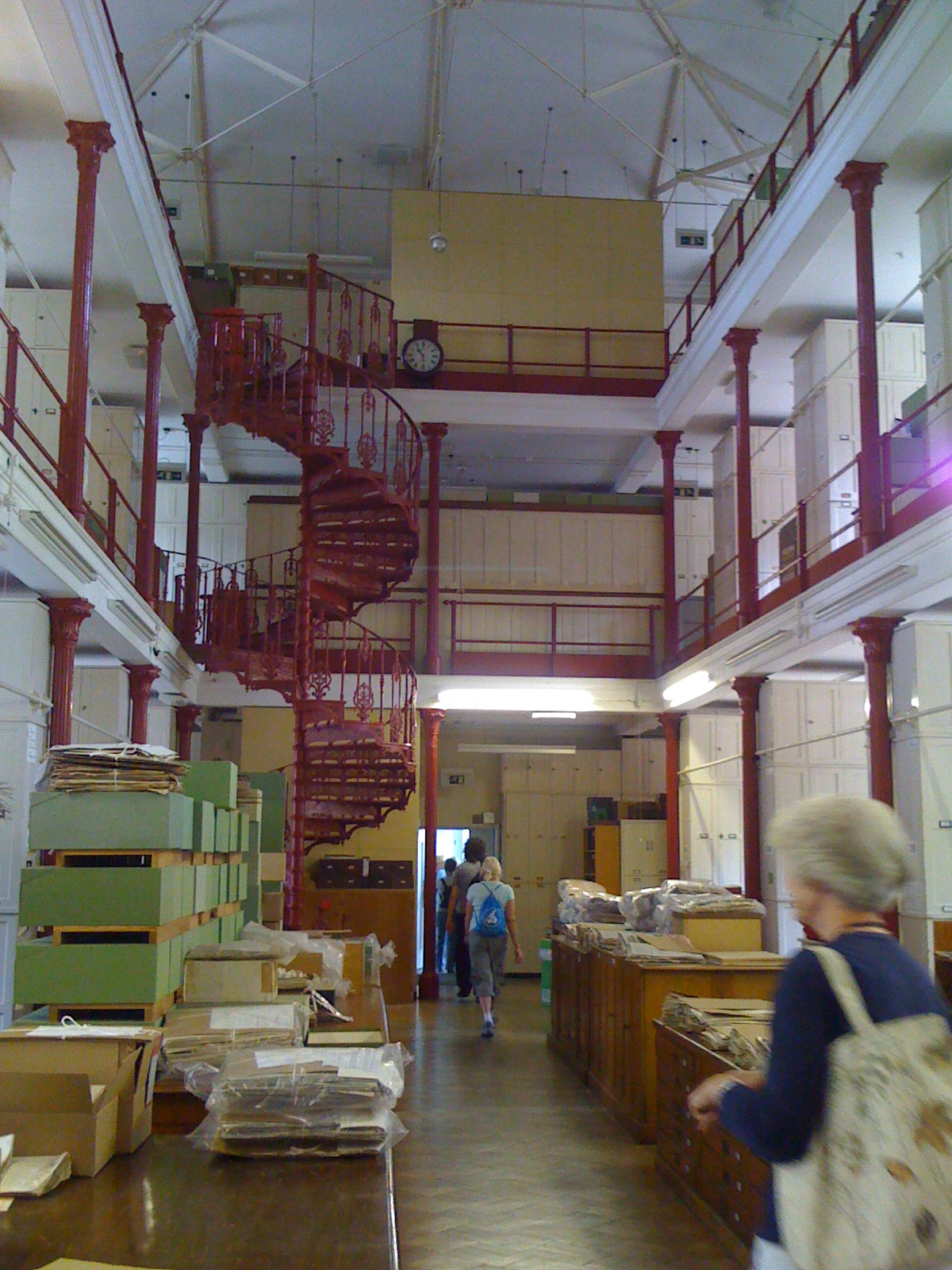
Victorian Herbarium

Victorian Herbarium

The new complex is linked in to Hunter House,  which was itself extended several times.  We  wandered through the vast, victorian herbarium (1853), with its fine cabinets and tables, designed to house the 7 million examples of preserved plant and fungi materials. Each specimen is identified, labelled, dried and mounted on card before being stored. Huge piles of examples were lying on tables, waiting to be processed. Specimens not suited to mounting on card are stored in jars of preservative. Of the collection, there are 350,000 “type specimens” – some dating back to the eighteenth century. These are the original specimens on which new species descriptions have been based, and they define the exact species name and provide standards for taxonomy and systematics of plants and fungi. The herbarium contains the collections of many well known scientists, including Charles Darwin and David Livingstone. Around 30,000 new specimens are processed each year. The herbarium supports research, and works with customs specialists to formally identify plant material coming into the UK – one area of expertise is in the identification of plants used in chinese medicine – sometimes, in dried form, it is difficult to be sure what materials really are, and this can have consequences if they are used in medicines of any kind. The Kew Herbarium collection is worldwide, in comparison to other herbaria, where the focus is on a particular type of material or locality.

We moved on to the digitization section – an innocuous room filled with PCs and large scanners. Here a team of around 20 people work on creating the electronic herbarium catalogue, containing high resolution images of the specimens. Each team member aims to create around 100 records each week (image plus data transcribed from original labeling), so the size of the project, supported by the Mellon Foundation, is considerable – with only 7 million to process. … the catalogue can be accessed from Kew’s website by anyone and saves many the need to spend on travel to London (alas for them …). I tried searching for Darwin’s specimens – lovely clear images  – and another way to spend hours in cyberspace – and I am not even a botanist …

Then on to the mounting room – here the specimens are laid out and glued down to the card, pressed slightly by sandbags to ensure they stick. The cards are lovely in themselves – reminding me of making collages for the long lost topic of ‘nature studies’ in primary school. When finished, they are sent to the herbarium for storing.

Herbarium - specimens awaiting collection

Herbarium – specimens awaiting collection
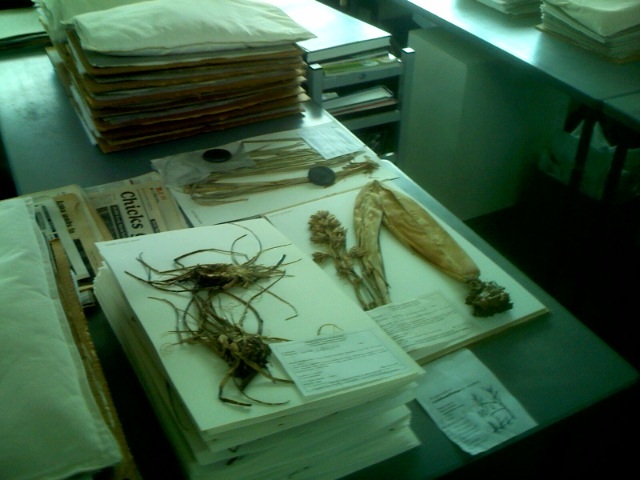
Herbarium - mounting room

Herbarium – mounting room

Herbarium - finished mounts

Herbarium – finished mounts

And finally to the library, which I mentioned is moving from its current location, which opened in 1969, to the new complex over the summer 2009. The library “contains more than half a million items, including books, botanical illustrations, photographs, letters and manuscripts, periodicals, biographies and maps.”  (Kew Library website 13/8/09). There are some lovely things amongst this collection and my images show some of the earliest books, with their hand painted illustrations, (florilegiums). The art of botanical illustration is still alive and thriving, as the human eye captures detail, and regard for the subject, in a way that a camera never can. A modern florilegium of the plants in Highgrove gardens has recently been published at a cost of 11,ooo GBP … there is one in the Kew Library – but I wasn’t allowed to touch it.

Tractatus de Herbis - Ortus sanitatis  c1490

Tractatus de Herbis – Ortus sanitatis c1490

Hortus Sanitatis 1491

Hortus Sanitatis 1491

Letter from Hooker to Darwin 1848

Letter from Hooker to Darwin 1848


For further reading see: Ward M and Flanagan JF (2003). Portraying plants: illustrations collections at the royal botanic gardens, Kew. Art Libraries Journal 28(2) 22-28.

Libraries, Museums and Galleries

I think I will remember 2009 as the year when I started to sense a renaissance in affection for physical collections – often surfacing as a desire to create electronic, virtual catalogues of not only books, but documents and artifacts. This is not to replace the real collection, but to increase access and to tell the world how much art and history add to life – go there and see the real things .. And I keep coming across the concept of ‘convergence of library, museum and gallery services’, although this is not really new from my perspective; we have offered a course tailoring  information skills for the cultural sector at City University London for 4 years now. Nevertheless, I can only see this renewed interest in organising collections as a good thing.

If you are one of these ‘renaissance’ types – you may be interested in this event at the National Gallery in London on 10/0/09 – entitled “Not Museum Pieces? – the developing role of archivists and librarians in museums


“Organised by the London Museums, Librarians and Archivists Group (LMLAG), this one-day conference is of interest to all who use, or work in, museum/gallery libraries and archives and are concerned about their future development.”


ALA 2009

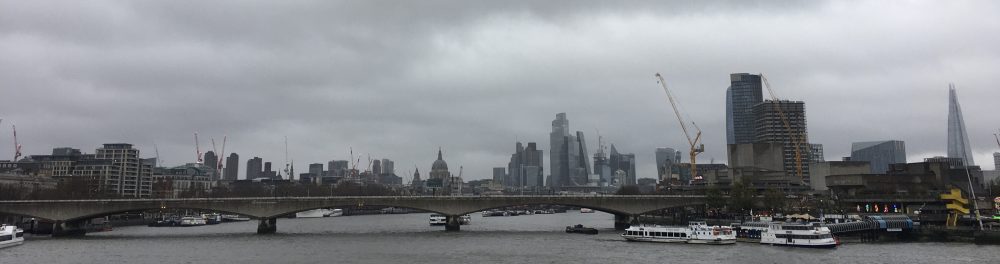
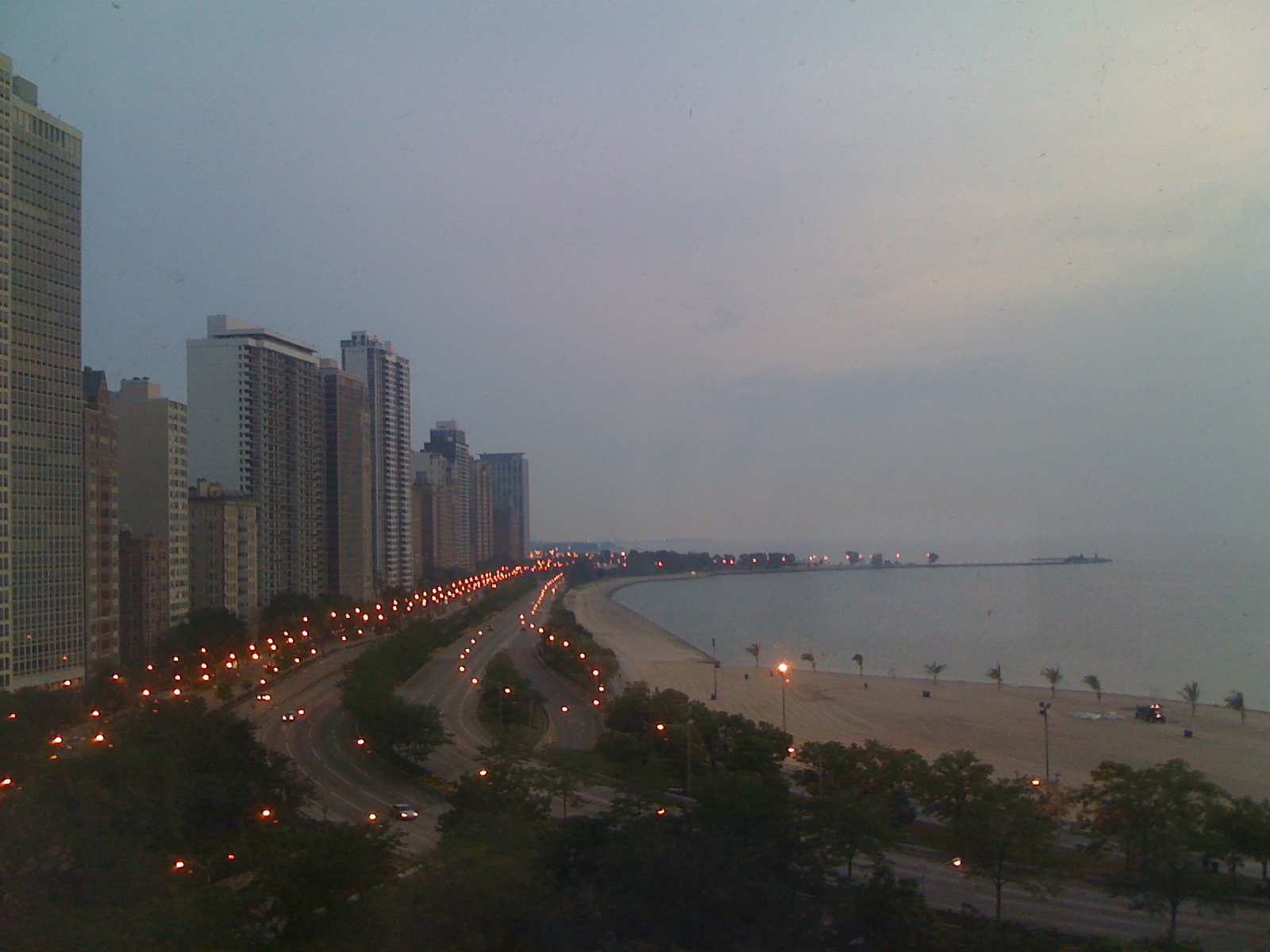
chicago from hancock tower bar july 2009

chicago from hancock tower bar july 2009

Chicago. I did have a wonderful time, and I do miss the sunshine. But not the food. Everything tasted the same – no taste at all. Guess it comes from a replicator. I tried pizza, pasta, bread, potates, fish, chips, salad, fruit and chocolate. Chilli flavored chocolate. Nothing. That’s why they eat hotdogs – its the only thing which has any flavor. And yes – it is not a good one. I bought a pot of almonds flavored with honey and chilli – hard to get down at first, especially for breakfast, but I adapted. They became delicious. So I bought several more pots – at great expense and to the amusement of the San Francisco cooking shop staff. Kooky English – look at them eating nuts. Caesar salad. A whole roughly shredded lettuce, some kind of garlicky goo, stale croutons and maybe, just maybe a hint of parmesan. Mouthful after mouthful of cellulose. Asked for added grilled chicken in the hope of protein. Akin to chewing my handbag. Gave up and went back to arrange shipping of honey chilli almonds to London. Dear reader, I almost lost weight.

But … this blog is not about food. I should be writing about library and information science. Yet I am compelled to write a few more things about Chicago – because for those visitors not concerned with the origins of whatever they swallow, the city offers some magical vistas. The skyscrapers, best viewed from a boat tour along the  riverways – old world meets the glassy future – are astounding. I gazed up at the Sears Tower in the last week before it was renamed the Willis Tower, this apparently against the wishes of the Chicago inhabitants. The lightfooted towers of babel stand up because of their internal skeletons, which you don’t see. So they look like they float ever upwards with no effort. And the views from the top are stunning.

oak beach at dawn (jet lag!) july 2009

oak beach at dawn (jet lag!) july 2009

And lake Michigan. Beautiful. Fake palm trees shimmering in the breeze, and the hardy few jogging, rollerblading or cycling around the shore path. The rest lying down. Everyone I talked to mentioned the weather. That the palm trees were fake, and that I did not want to be there in the winter. (ER fans will recall it is always snowing outside the emergency department). Yet the streets in summer are pristine and the flower beds immaculate and imaginative. Rather putting London to shame with regard to no graffiti, litter or dead flower heads. No one walks about though – cars are usual even for crossing the street. The windows don’t open either. The whole place is hermetically sealed against the weather – and somehow even the London rain seems refreshing after the endless recycled air.

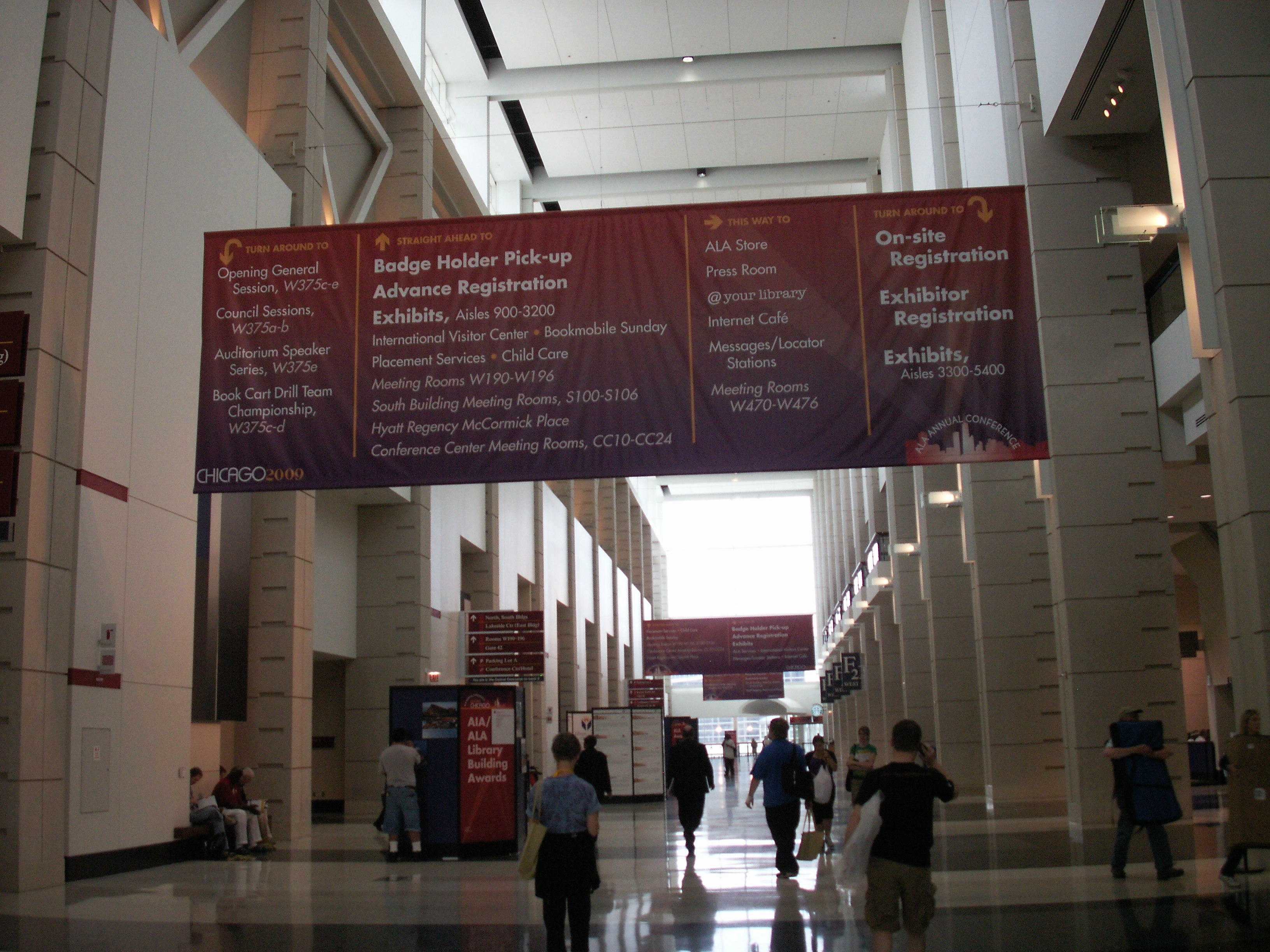
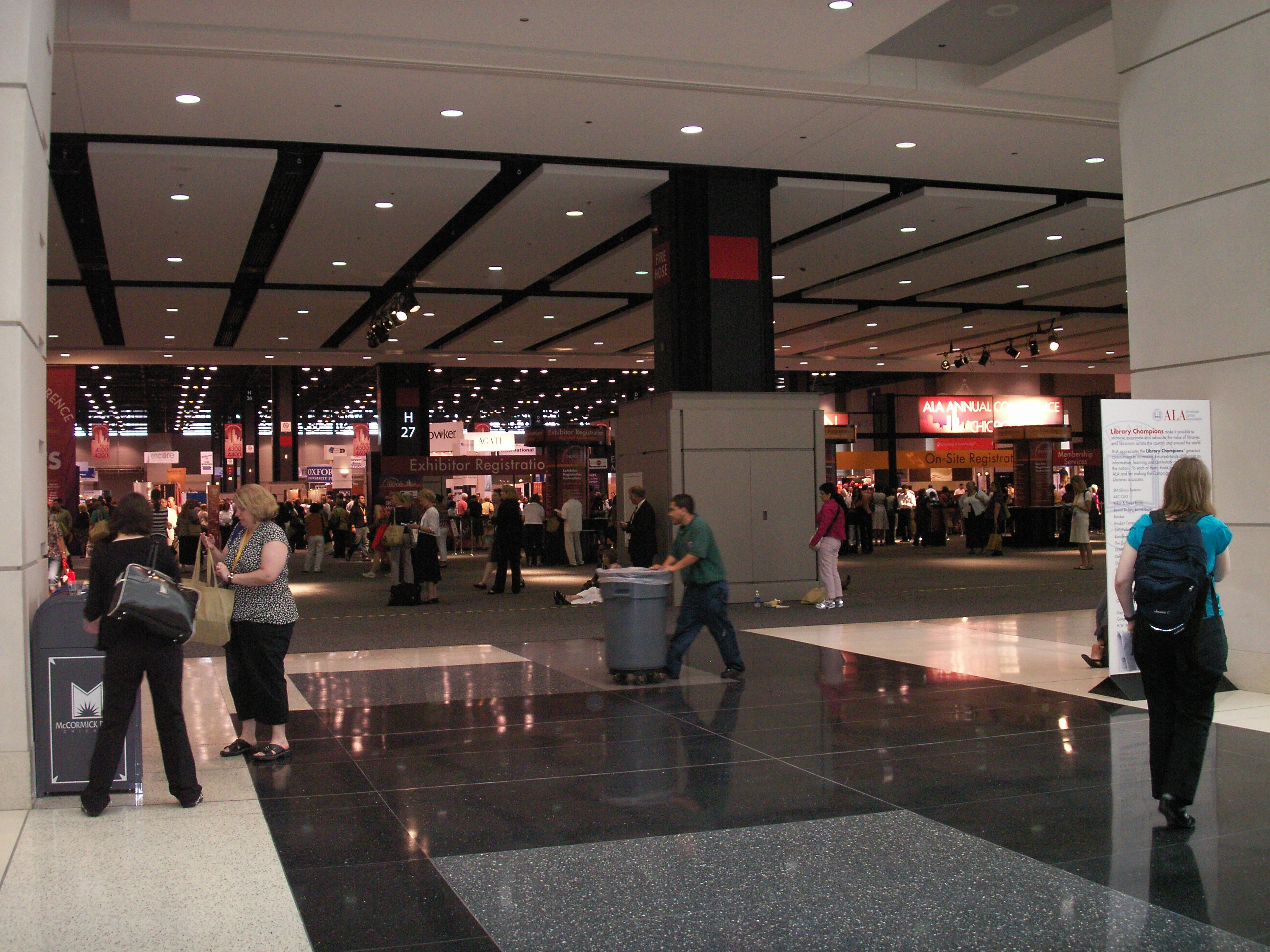
ala chicago 2009

ala chicago 2009

And so to ALA. Very big event. Around 29,000 attendees so I’m told. The perfect place to gain some idea of what is happening in LIS in America. I was interested in two things; other LIS schools and ‘hot topics’.

Everyone I spoke to was enthusiastic about LIS as an academic discipline, and as a profession. I found it easy to make friends, and fill my pockets with magnetic clips and sweets. I have enough pens. The best branded freebie was a lip gloss from a library school. Why don’t we give students lip glosses here at City ?

The library schools in the States offer extensive curricula (see www.alise.org), but I think we score on originality in two ways. Firstly, tradition. Jason Farradane worked at City, establishing our Information Science course as the new discipline emerged. We incorporate fundamental ideas, the history and philosophy of LIS into our foundation module, and use these to build towards an understanding of where the profession is now, and where it may go in the future. Secondly, we emphasize technology. Innovation in communication is essential in our discipline, and whilst valuing ‘real’ media, we shake communications technology until it rattles.

Emerging trends ..? Well, I was pleased to hear presentations on privacy and data protection. I read endlessly about how the UK is ‘sleepwalking into a database state’, and I feel we should pay attention to issues ranging from information gathered from people who use information services, right through to what we willingly blab on social networks. Why do you have to give your name and address ? Shouldn’t you be able to read what you want in private ? This is an issue in the US of course, led by the Patriot Act into the consciences of pubic librarians.

Convergence of library, museum and gallery services. The world is waking up to the value of artifacts and collections. I have read that this is because of the recession and that everyone wants to ‘feel good’, but it could also be a kind of common sense. Digital is fine and download to the desktop so enticing. But a surprisingly large number of people have a fondness for preservation and archiving. A stroll through the exhibition revealed books, books and more books (and a few shawls and necklaces ..) – no indication that e-books were taking over at all. Although I did see several people around the city using e-book readers, in a way that I have not in London. So the point being that libraries, museums and galleries are experiencing a renaissance, and that consequently trained staff are required. Information is not just about libraries, and talent is needed in many sectors. And honestly, museums and galleries are fantastic places to work …

Web 2.0 – a lot on this – but I was gratified to glean that we are already up with the game and that annotated catalogues and social networking is usual to us at City – we win on tweeting too 🙂 Publishing and web authoring is also usual for our graduates.

Other aspects included cataloguing and metadata, and I collected as much material from the Library of Congress as I could cram in my suitcase ( alongside all the honey chilli almonds ..).

Finally, an indulgence, as to how science fiction has contributed to information, technology and society. Well, if we can imagine it, maybe we can make it happen – although I am not going to talk about Star Trek, and indeed nobody at the conference mentioned it.

ala2There was lots more that I didn’t cover. Have a look at www.ala.org, or www.ala.org/ala/conferencesevents/past/index.cfm for at least some of the presentations online.

And yeah I did go to the shops. I bought a new handbag because I chewed through my old one.