New Academic Year 16/17 at CityLIS London Library School

citylisbanner

Image by @ludiprice cc-by


Thoughts around my talk planned for Induction this year. For reference, as I most likely won’t stick to the script.

—–

Library & Information Science

I am delighted to welcome our new and returning students to the #citylis London Library School, as we start the academic year for 16/17. This year we are celebrating joining the University of London to become City, University of London. This new association will bring many benefits, including access to new resources, wider perspectives, and a higher profile for the work we do, and for our students and alumni.

Library and information science (LIS) addresses the questions arising from documentation of the human record. We explain this by saying that LIS research and practice focuses on the categories of activity comprising the information communication chain, shown below:

screen-shot-2016-09-18-at-19-49-06

Information Communication Chain – @lynrobinson cc-by

The processes of the information communication chain are often associated with information literacy, and information professionals practice, share and promote the skills and abilities which facilitate information literacy, and more recently, digital literacies.

Another way to consider the goals of library and information science is from the perspective of scholarly communication. That is, the examination of the ways in which knowledge is created, accessed, developed, communicated, validated, preserved and re-used. The processes of scholarly communication are related to those of the broader information communication chain, and our course content will highlight issues (e.g. scholarly publishing and open access) drawn from these related perspectives.

Whilst we often use the term ‘scholarly’ in LIS discussion, our focus on understanding (see recent work by Bawden and Robinson) is intended to be inclusive, that is, of relevance to anyone from any sector of society, not solely those associated with the academy.

Changes and developments in the processes of the communication chain and in scholarly communication occur as a result of several factors. These are referred to as drivers or agents for change. The principle change agent is technology. The move within scholarly communication to digital processes has had a significant impact on the work of the LIS sector, especially in higher education and the research lifecycle, but technological changes also impact information processes within the wider community.

Whilst many definitions of LIS refer to keeping the record of humanity, it may be that we now need to expand our model, to consider documentation of the machine record, in light of contemporary developments in technologies such as machine learning and artificial intelligence, resulting in an autonomous ability to create text, art, music etc.

Our core module DITA (Digital Information Technologies and Architecture)* sets out and explores the technological landscape as it relates to LIS. We are, however, mindful that in technology perhaps more than other subjects, today’s news is tomorrow’s recycled notepaper. Our learning ambitions look towards sustainability; we seek the ‘i’ in ‘data’, rather than the latest device. Although #citylis students have the option to take more specific computing modules as their elective, if this is of interest, our core computing content is carefully weighted towards the use of technology in helping us to answer the globally significant questions of documentation, which include:

  • how to understand the nature of documents
  • how to record and organise documents
  • how to facilitate and promote access to information
  • how to ensure equality in access to information
  • how to preserve documents
  • how to choose what to preserve
  • the ethics of documentation, including preservation, access and use
  • how to analyse documents to create new knowledge
  • how to use what we know to promote understanding
screen-shot-2016-09-18-at-13-26-22

Google search for peace, love, understanding. Screenshot by @lynrobinson on 18/09/16 cc-by

Technology is often compelling, but other drivers for change must be appreciated, including politics, economics and social trends. We shall consider all of these factors as we progress through our course material.

Additionally, we will examine the role philosophy plays in providing a framework of guidance for LIS research and practice. We will look specifically at the philosophy of information as authored by Luciano Floridi, but the work of other philosophers and theorists in relation to information, documentation and communication will be introduced.

A related thread, running across the whole course, is ethics. Library and information professionals have long been engaged with ethical behaviour, in respect of issues of censurship, privacy, and equality of access. Our contemporary society, within which we cannot help but leave a digital footprint, requires us to re-examine what is meant by privacy, and to establish and understand the consequences for what we give away, perhaps unknowingly, when we use digital network services.

Manifestations of ‘ethics in action’ then, include questions posed to the scholarly community by open access, open data, and open educational resources, but also societal questions posed by access to network services, use of the internet and social media, and the impact of big data. Library and information professionals have a responsibility not only to promote ethical information behaviour, but to contribute to its definition and evolution.

Whilst core LIS material including information history, information resources, retrieval, management and use, is still very much prevalent and emphasized within our syllabus, I would like to introduce more of our new content. LIS is a broad discipline, and there is always more material than we can cover within the timescale of our masters programme. Course content is selected primarily according to the expertise, interests and understanding of our #citylis teaching team, benefiting further from the significant input of external colleagues, practitioners, alumni and current students.

One of the most noticeable areas rising to prominence for the LIS professional is data management. Within the academic and research sector, this is often written and talked about in respect of research data management, but the wider phrase, ‘data curation’, invites a broader audience from LIS workers within the social, cultural and heritage sectors to consider issues of documentation (Robinson 2016). Alongside data management, where we can envisage a data file as a document, there is the need for data metadata, i.e. data about the data. Standards in this area are just starting to emerge, as are repositories for data, directories of data repositories, data papers, and journals about data.

The increasing availability of APIs allows datasets to be searched, analysed, re-used, remixed and reimagined. APIs govern the data we can access from the massive collections accrued by social media, scientific, commercial and government bodies. Of course data collectors may not share willingly, and the contrast within our society between the increasingly visible open access/data movement, and closed data capture systems is striking. Knowledge is power, and keeping closed datasets has potential benefits for some, yet disadvantages for others.

We will also consider analysis of data. Analytics, counting things, affects us all. We have witnessed recently a striking duality in LIS, between qualitiative, informational analysis, and the contrasting quantitative approach.

These practices are already significant informational activities in disciplines from science to the humanities, and the library and information science community is ideally placed to comment on, facilitate and contribute.

Returning to more familiar territory, we are also introducing a focus on libraries, librarianship and library spaces, in relation to the current socio-political climate, and as considered alongside the historical use of space in the library, and public spaces in general.

On a more conceptual level, we will be pushing the boundaries of our discipline to consider the future of documents, the relevance and meaning of understanding, and the ways in which philosophical insight can contribute to practice within the sector.

Social Media and Communication

In addition to its forward-looking socio-technical focus, #citylis is also known for the promotion of communication and networking skills. These skills are commonly referred to within the mixed bag of ‘soft skills’, which are highly regarded by employers in all sectors. Whilst this umbrella phrase is somewhat unappealing, good communication skills have long-lasting appeal. They work even when the technological systems we use have returned to plastic dust. It will come as no surprise to anyone joining our cohort, that students and staff are encouraged to engage with and beyond their cohort via social media, as well as via more traditional scholarly output mechanisms. Our course actively promotes professional writing skills, and we consider reflective learning, practice and research throughout the year. We realise that not everyone is comfortable posting their own original material to a public forum, but we do everything we can to ensure a supportive environment, and we do require all our students to be aware of the nature, functions and advantages of social media from the LIS perspective.

We use blogs and Twitter to promote and discuss our course material, to share resources, research ideas, practice tips, to start discussions on current issues, highlight events, and to create a community of past, current and future students beyond the physical classroom, and the constraints of the course timescale. Further, we use social media tools to engage with the wider profession, and others who may not have encountered LIS before.

We are also aware of the negative side of social media engagement, and we hope to equip all our students with the skills to identify, be resilient to, and to avoid contributing to social media’s dark side. This includes online obsession, trolling, abusive or passive-aggressive posts, boast-posts, oversharing, and posting whilst drunk, otherwise intoxicated or merely very angry (!).

Whilst for resource reasons we stick to blogs and Twitter, we encourage any of our students to engage with other social media platforms in a professional capacity. Social media applications, especially those handling multimedia, are key communication mediums in the 21st century. They are always evolving however, and before investing large amounts of time and energy in an application, it is always wise to consider the long-term (say, over 5 years) future of the content.

Modus Operandi

Our courses are delivered face-to-face, and although we are a postgraduate school we do ask that everyone attends the taught sessions. All students take 8 modules, 7 core plus one elective. There is then the individual dissertation. Detailed course materials can be found on the Moodle e-learning system for registered students, but public information about indicative content can be found on our course web pages, (LS, IS). Our courses can be studied full-time for 1 year, or part-time for 2 years.

Although some course materials are available on the e-learning system, this is not intended to suggest that attending the face-to-face sessions is unnessessary. Course participants are also encouraged to engage with out-of-hours activities and social media. A greater understanding of the concepts presented throughout the course will be gained from engagement with the course cohort, and wider professional networks.

As the Programmes Office may communicate official news to students via the UK postal system, do please ensure that we have a reliable home address.

Keeping up-to-date is hard, and for many of us the amount of reading and current awareness seems almost overwhelming. It does get a little better with time, as we learn to filter out the signal from the noise, but we live in a society where there is always more to pay attention to than we have time for. We all derive our own coping strategies, which invariably includes selection, and the ability to decide what to pay attention to. This ability is one of the key skills for contemporary society.

We will provide extensive, structured lists of resources during the academic year. We aim to provide students with a fair representation of the literature, but do remember that you do not have to read everything.

We work very hard on the content of, and interconnection between, our modules. However, new ideas, references, practices, organisations and methods arise all the time, and so material encountered during the formal course time will often be superceded fairly quickly. The #citylis teaching team members act as guides through what is undoubtedly a widespread, pervasive, and rapidly changing discipline, in the hope that the frameworks and concepts we communicate will be worthwhile, and that our students will be empowered with skills for life-long learning. Hold tight as we tell the stories, check, challenge and ask questions about everything.

Enjoy the show!


References:

Robinson L (2016). Between the deluge and the dark age; perspectives on data curation. Alexandria, 26(2), 73-76. DOI: dx.doi.org/10.1177/095574901666106

*From 17/18 DITA has been renamed Data, Information, Technologies and Applications
Summer Reading for Library & Information Science

image

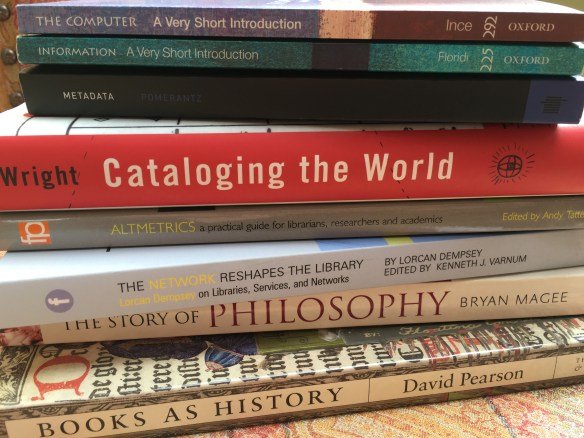
photo by @lynrobinson cc-by

For those of you planning to study for a masters in Library or Information Science, LIS, here are some suggestions for background reading in preparation for your course. Although I am writing from the perspective of those of you intending to enroll for the academic year 16/17 with the Library School at City, University of London, [#citylis], it is possible that my recommendations may be of wider interest; to those studying elsewhere, or for those of you who are just interested in what LIS is all about.

My last ‘summer reading’ post was four years ago. Over that time, our course content has developed, along with the nature of information and communication processes, and our understanding of library and information science as a discipline and practice. Whilst the texts that I suggested in 2012 remain valid, new publications are always appearing, and existing texts to which I have not yet paid attention often find their way into my field of vision.

The intention here is twofold. Firstly to offer a personal, ‘capsule’ selection of printed books, (although some may be available in electronic format), which will cover LIS from the broad perspective, the big-picture if you like. Throughout the course we will provide more specific reading lists, including: books, papers, websites, blogs, Twitter accounts, videos, podcasts, artworks and places to visit. My idea here is more interdisciplinary, showing the reach and depth of our discipline, and its continued relevance to society today. It is not necessary to read all the books, and each one stands alone perfectly well, although I have described them in an order of understanding the complexity of LIS.

My second aim is to say something about our use of social media at #citylis, and to suggest some internet resources as starting points for those of you new to digital communication processes.

The Books

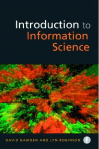
Intro to Inf SciBawden D and Robinson L (2012). Introduction to Information Science. Facet: London

In spite of the deluge of novelty, some texts remain seminal and I will start by mentioning Introduction to Information Science, which I co-authored with David Bawden, as an accompaniment to our classes in 2012. The text remains a solid place to start if you need an overview of the sort of topics and concepts that are covered in courses relating to library and information science. The text has been very well received, and is now used internationally as a basis for understanding and framing the discipline. We give many ideas for further reading and pathways for following-up with areas you find interesting or especially relevant. The topics listed are covered in my previous post, but you can see the content from the link to the Facet Publications site.

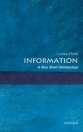
Intro to InformationFloridi L (2010). Information: a very short introduction. OUP: Oxford

The success of OUP’s ‘very short introduction’ series marches on. This series has the enviable, dual status of being both informative, and collectable. It is impossible to stop at ‘just one’ and I find myself drawn by the physical aesthetics of the little volumes to regularly add one more to my set. In this context, I would like to mention again two of the other texts from my last post. These volumes cover respectively the two concepts that are central to our courses: information, and its processing by computers. There are many books which cover information and computing, as neither of these subjects is unique to LIS. These books however, offer an approach suitable for readers from a wide variety of backgrounds, with an interest in information and its communication from a semantic perspective.

Firstly, information. Luciano Floridi is well known for his work on the philosophy of information, which informs our work within library and information science as a discipline and practice. This volume considers the nature of information, and the social and ethical implications it raises.

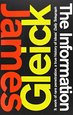
51UULOTow+L._AC_UL115_Gleick J (2011). The Information. Pantheon

If you enjoy the concept of information from Floridi’s ‘very short introduction’, you might like to read James Gleick’s wider story, “The Information”.


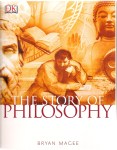
sc0004ffe2Magee B (2016). The Story of Philosophy. Dorling Kindersley

If you would like a wider introduction to Western Philosophy, try “The Story of Philosophy” by Brian Magee.


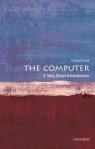
9780199586592Ince D (2011). The Computer: a very short introduction. OUP: Oxford.

Secondly, the computer. The LIS sector has been inseparable from technology for around 20 years now, although many information professionals still feel anxious when faced with understanding the mechanisms by which information is processed. Darrel Ince’s book offers reassurance, in explaining how a computer works, and importantly, why we need to know. The book is short, with a social focus, and technological pain will not last long.

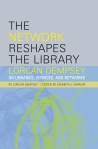
9781783300419Dempsey L (2014). The nework reshapes the library. Ed. Varnum K. Facet: London

Having embraced the technology, Kenneth Varnum’s 2014 edited volume of Lorcan Dempsey’s writing, The Network Reshapes the Library provides good follow-up reading on how technologies are changing the work of the library professional. Dempsey writes on a diverse range of topics, covering library organization, services and technologies, and the evolution of the library to embrace the learning and research needs of inhabitants of the 21st century.

imagesWright A (2014). Cataloguing the World: Paul Otlet and the birth of the information age. OUP: Oxford

The modern information age, underpinning our library and information services today, is often attributed to the work at the turn of the 19th century by Paul Otlet. Alex Wright’s book Cataloguing the World: Paul Otlet and the birth of the information age is a wonderful telling of the story of humankind’s longstanding and continued effort to collect and organize knowledge, and Otlet’s part in this.

Otlet’s prescient understanding of the varied nature of documents was coupled with his work on the UDC, Universal Decimal Classification. The process of describing documents now embraces digital as well as physical items. Cataloguing and classification codes used to describe physical entities laid the foundations for modern day metadata; data about data, which is used to described and index the digital world.

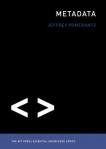
9780262528511Pomerantz J (2015). Metadata. MIT Press: Cambridge, Massachusetts

Jeffrey Pomerantz book Metadata describes the origins and types of metadata, how it is used, and why it exists.


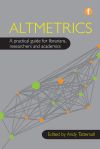
9781783300105Tattersall A (2016). Altmetrics: a practical guide for librarians, researchers and academics. Facet: London

Looking further into the digital world, we encounter new methods of scholarly communication and dissemination of information. For those of you with an interest in digital scholarship, Andy Tattersall’s new book: Altmetrics: a practical guide for librarians, researchers and academics focuses on research artifact level metrics which go beyond traditional journal papers to include book chapters, posters and data sets. The book covers the history of altmetrics, and looks at how library and information professionals can facilitate new approaches to learning and sharing knowledge.

books as historyPearson D (2012). Books as History. British Library: London

Finally, for those of you who came for the books. Take a look at David Pearson’s Books as History, and James W P Campbell’s The library: a world history (photographs by Will Pryce). In case you were wondering if LIS is the right discipline for you, pictures speak a thousand words.


9780500342886_26164Campbell W P and Pryce W(2013). The Library: a world history.  Thames and Hudson: London


All of the books listed above should be available from the smashing City University Library for anyone who is already registered. If you need more inspiration, please take a look at my LibraryThing catalogue, where you can see books tagged for the modules I teach, or for LIS related topics in general. There is some background to using my catalogue on my profile page.

Social Media

At #citylis, we are unapologetically digital. Whilst the documentation of our physical/analogue world will always be an essential tenet of LIS, we cannot ignore the digital processes and entities which are now pervasive in our information society. During the course, we will take the opportunity to examine what this means for LIS, and discuss how the digital realm relates to the physical.

Accompanying the contemporary shift to a culture which is as much digital as physical in many parts of the world, has been a change in the processes of scholarly communication; a change in the ways in which knowledge is created and shared. The tradional, print based dissemination pathways are evolving into new highways of digital scholarship. Although there is much to be worked out before the traditional forms of publishing are completely superseded, we encourage all our students to  understand the factors for change in communication, and to gain experience in working digitally. Our starting point will be to introduce two popular social media channels: tweeting and blogging.

Many of you will already have a Twitter account, and some of you will be familiar with blogs. For those of you new to these practices, we will run a social media 101 class at Induction (this year on 23/09/16). If you are keen to get a head start, you may like to check out:

Twitter: https://support.twitter.com/articles/215585#

WordPress: https://www.youtube.com/watch?v=YzrRQHSMc5w (video)

Writing for Research: https://medium.com/@Write4Research

The Lost Infrastructure of Social Media: https://medium.com/@anildash/the-lost-infrastructure-of-social-media-d2b95662ccd3#.rm13ptw50

——-

For further information about Induction, please check your email if you are a new #citylis student, and don’t forget to follow us on Twitter @citylis. We have a blog, where you can read about our alumni, news, research and events. If you have any further suggestions for summer reading, please add a comment.

The Future of the Document: documenting performance – Interdisciplinary Symposium 31/10/16

This post about our exploratory, interdisciplinary symposium, first appeared on  http://documentingperformance.com, on 25/07/16. The event is intended to start a conversation between practitioners, professionals, researchers, scholars and teachers from different disciplines, who are interested in documents and documentation. Please visit this main site for further information and registration details.

——-

small logo

The Future of the Document: documenting performance

Symposium: Monday 31st October 2016, City University London

Organisers: Lyn Robinson & Joseph Dunne

Call for papers

One of the major concerns of library and information science (LIS) is preservation of the record of humankind. In order to preserve something for future access we need to understand what it is we are saving. LIS considers preservation and access from the viewpoint of the document. This has prompted the question: ‘what is a document?’ The answer is far from straightforward, and has been debated since the end of the 19th century, when Otlet suggested that images, works of art and sculptures could be regarded in the same way as books, journals and papers, and later, in the 1950s, Briet suggested that even an animal might be considered as a document.

It would seem the question might be ‘what is not a document?’

Technological advances have given us digitization, which has added more complexity to the issue. Physical/analogue documents can be rendered in digital format, and the digital surrogates regarded as documents in their own right.

The rapidly expanding and evolving trend towards digitization has led to a convergence of GLAM sector institutions, so that the work of libraries, galleries, archives and museums has overlapped for some years now.

This interdisciplinary symposium goes beyond coalescence within the GLAM sector, to consider documentation and preservation of performance.

Today all types of performance can simply be broadcast and made accessible to millions of people through their mediatization – be it theatre and performance art; rock concerts; political performances such as party conventions or the inauguration of the U.S. president; ritual performances such as funerals (e.g. Princess Diana’s) or papal blessings urbi et orbi; or sporting events such as the Olympic Games. A new dichotomy has emerged between live performance constituted by the bodily co-presence of actors and spectators and the autopoietic feedback loop and mediatized performance which sever the co-existence of production and reception. Mediatized performance invalidates the feedback loop.

Erika Fischer-Lichte, 2008

At some level, the event simply happens; at the same time, it cannot be defined merely as what occurs

Jill Bennett, 2012

Much work in this area has been undertaken, but often outside the LIS domain and in separate strands of the performing arts. Work in defining and documenting dance, performance, performance art and theatre has progressed in parallel, yet disparate projects, although the goals of documentation appear consistent.

This cross-disciplinary, one-day event will bring together scholars, practitioners, artists and other professionals from the fields of Library & Information Science and Theatre & Performing Arts to start a conversation, and to share ideas and theories around documentation, preservation and access for complex-documents.

Abstracts of up to 250 words are invited for 20 min presentations.

Subjects for discussion may include, but are not limited to:

  • Definitions of the document / not a document.
  • What are the definitive characteristics of performance? Can these be recorded?
  • Does the process of documentation represent the performance, or it is a surrogate/new document
  • Who owns the document, the artist or the documenter?
  • Body memory
  • Projects documenting performing arts
  • Use of technologies such as augmented reality, virtual reality or mixed reality to embody the essence of performance as a document
  • Online performance platforms – What opportunities does the Web afford artists wishing to reach new audiences? How can performing arts and LIS professionals collaborate?
  • Experiments with documenting and archiving strategies has lead many artists and scholars to see these practices as creative activities in their own right. What new art forms might arise out of them? Conversely, do LIS professionals consider their practice as artistic?
  • Lexicon of practices – Is there a language barrier between the performing arts and the LIS fields? How can this be overcome? What forums can be initiated to build dialogues between the two fields? What opportunities might arise out of this collaborative effort?

Please send your abstract (along with up to a 100 word biography) to lyn@city.ac.uk, and joseph.dunne@bruford.ac.uk by 1st September 2016. Notification of acceptance will be emailed by or before 30th September 2016. When you submit your abstract, please also register for the event (free). The symposium will take place on Monday October 31st 2016. Please contact either of us if you have any questions about the symposium.


Organisers:

Lyn Robinson is head of Library & Information Science at City University London. She is well known as course director for the library school #citylis. She has a longstanding interest in documents and the processes of documentation.

Joseph Dunne is Research Associate at Rose Bruford College. His PhD research investigated how archiving and documentation strategies can become the genesis of site-based performance practice. Joseph’s specialisms include audience participation, performance re-enactments, cultural memory, and theatre legacies.

Venue: The symposium will take place on 31st October 2016, at City University London, Northampton Square, EC1V0HB. We regret that we are unable to pay travel expenses to speakers or participants.

Booking a place: Attendance is free, but registration is required. Anyone with an interest in understanding performance as a document, and the documentation of performance is welcome!

Programme: May be subject to change.

Sponsors: We are seeking sponsorship for our event. If you are able to contribute to costs for a sandwich lunch or drinks reception, please contact Lyn Robinson, lyn@city.ac.uk