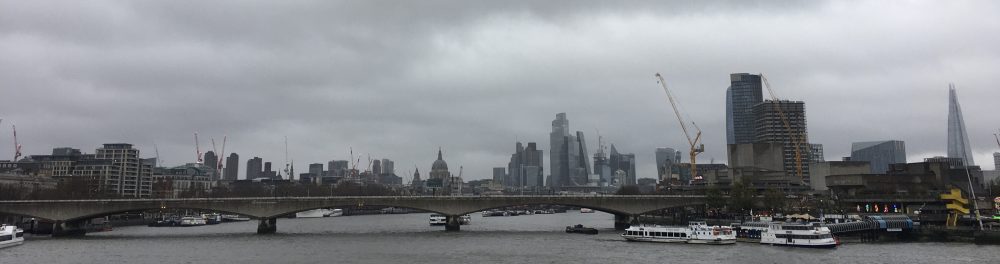

chicago from hancock tower bar july 2009
Chicago. I did have a wonderful time, and I do miss the sunshine. But not the food. Everything tasted the same – no taste at all. Guess it comes from a replicator. I tried pizza, pasta, bread, potates, fish, chips, salad, fruit and chocolate. Chilli flavored chocolate. Nothing. That’s why they eat hotdogs – its the only thing which has any flavor. And yes – it is not a good one. I bought a pot of almonds flavored with honey and chilli – hard to get down at first, especially for breakfast, but I adapted. They became delicious. So I bought several more pots – at great expense and to the amusement of the San Francisco cooking shop staff. Kooky English – look at them eating nuts. Caesar salad. A whole roughly shredded lettuce, some kind of garlicky goo, stale croutons and maybe, just maybe a hint of parmesan. Mouthful after mouthful of cellulose. Asked for added grilled chicken in the hope of protein. Akin to chewing my handbag. Gave up and went back to arrange shipping of honey chilli almonds to London. Dear reader, I almost lost weight.
But … this blog is not about food. I should be writing about library and information science. Yet I am compelled to write a few more things about Chicago – because for those visitors not concerned with the origins of whatever they swallow, the city offers some magical vistas. The skyscrapers, best viewed from a boat tour along the riverways – old world meets the glassy future – are astounding. I gazed up at the Sears Tower in the last week before it was renamed the Willis Tower, this apparently against the wishes of the Chicago inhabitants. The lightfooted towers of babel stand up because of their internal skeletons, which you don’t see. So they look like they float ever upwards with no effort. And the views from the top are stunning.
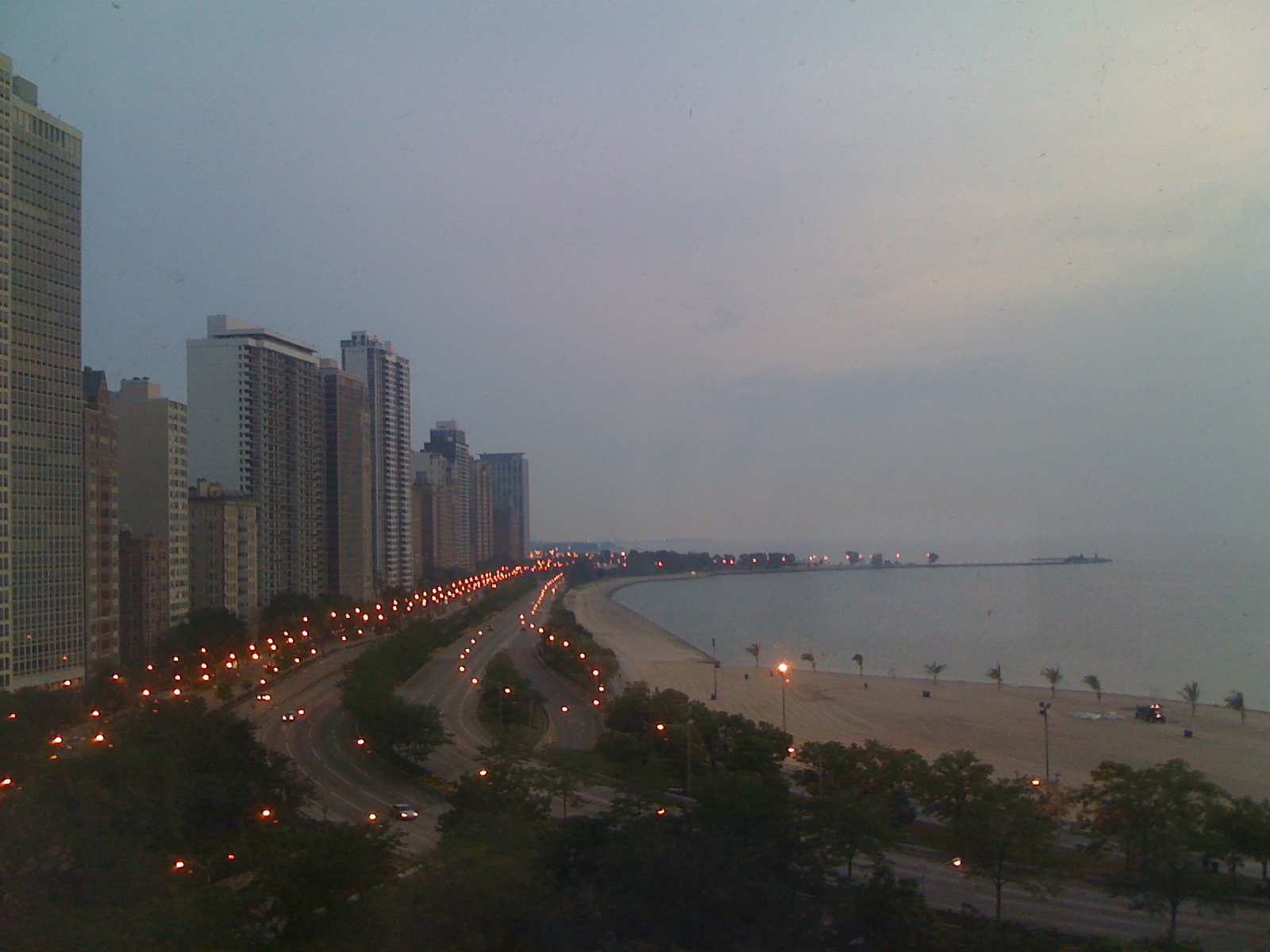
oak beach at dawn (jet lag!) july 2009
And lake Michigan. Beautiful. Fake palm trees shimmering in the breeze, and the hardy few jogging, rollerblading or cycling around the shore path. The rest lying down. Everyone I talked to mentioned the weather. That the palm trees were fake, and that I did not want to be there in the winter. (ER fans will recall it is always snowing outside the emergency department). Yet the streets in summer are pristine and the flower beds immaculate and imaginative. Rather putting London to shame with regard to no graffiti, litter or dead flower heads. No one walks about though – cars are usual even for crossing the street. The windows don’t open either. The whole place is hermetically sealed against the weather – and somehow even the London rain seems refreshing after the endless recycled air.
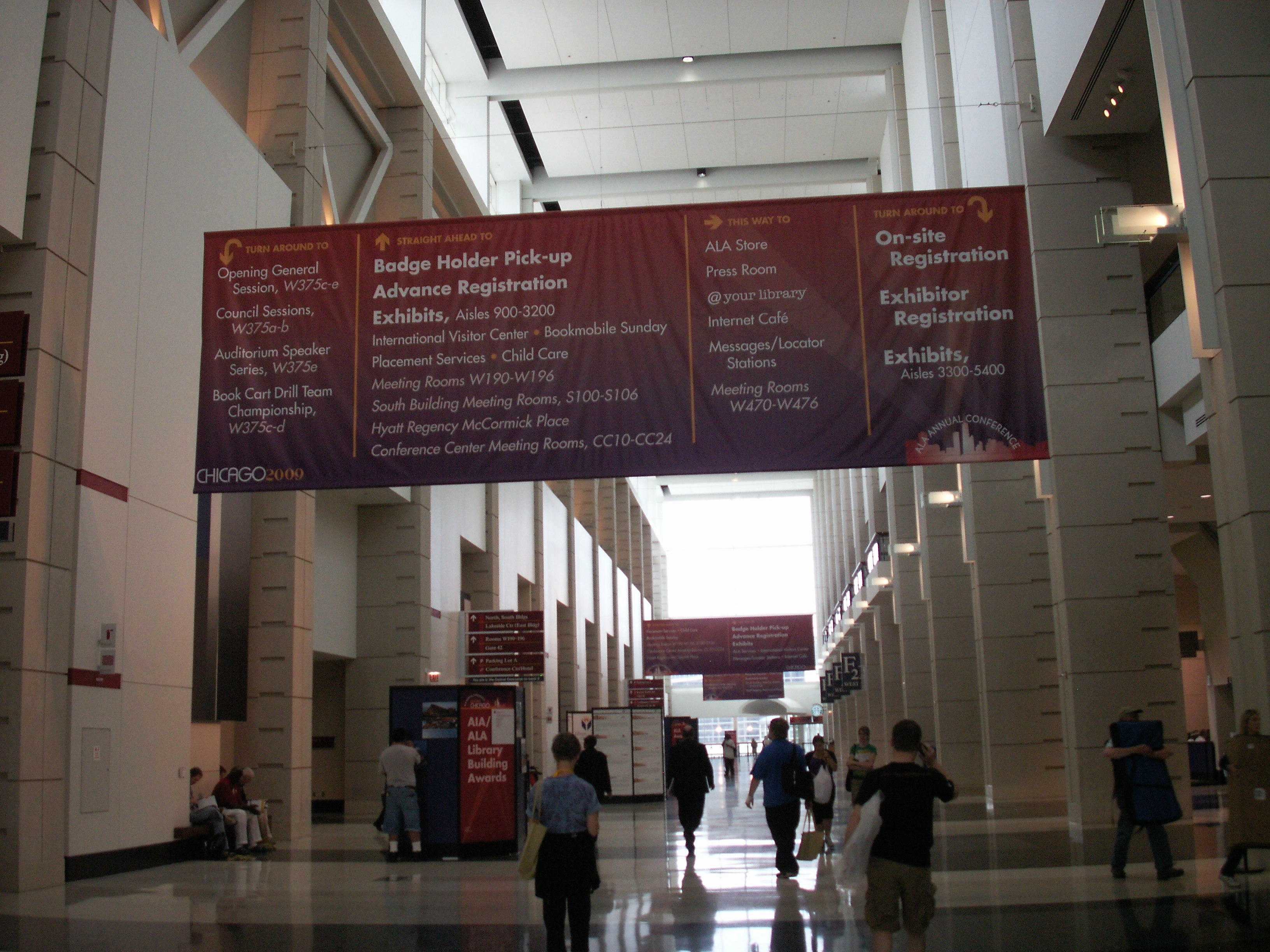
ala chicago 2009
And so to ALA. Very big event. Around 29,000 attendees so I’m told. The perfect place to gain some idea of what is happening in LIS in America. I was interested in two things; other LIS schools and ‘hot topics’.
Everyone I spoke to was enthusiastic about LIS as an academic discipline, and as a profession. I found it easy to make friends, and fill my pockets with magnetic clips and sweets. I have enough pens. The best branded freebie was a lip gloss from a library school. Why don’t we give students lip glosses here at City ?
The library schools in the States offer extensive curricula (see www.alise.org), but I think we score on originality in two ways. Firstly, tradition. Jason Farradane worked at City, establishing our Information Science course as the new discipline emerged. We incorporate fundamental ideas, the history and philosophy of LIS into our foundation module, and use these to build towards an understanding of where the profession is now, and where it may go in the future. Secondly, we emphasize technology. Innovation in communication is essential in our discipline, and whilst valuing ‘real’ media, we shake communications technology until it rattles.
Emerging trends ..? Well, I was pleased to hear presentations on privacy and data protection. I read endlessly about how the UK is ‘sleepwalking into a database state’, and I feel we should pay attention to issues ranging from information gathered from people who use information services, right through to what we willingly blab on social networks. Why do you have to give your name and address ? Shouldn’t you be able to read what you want in private ? This is an issue in the US of course, led by the Patriot Act into the consciences of pubic librarians.
Convergence of library, museum and gallery services. The world is waking up to the value of artifacts and collections. I have read that this is because of the recession and that everyone wants to ‘feel good’, but it could also be a kind of common sense. Digital is fine and download to the desktop so enticing. But a surprisingly large number of people have a fondness for preservation and archiving. A stroll through the exhibition revealed books, books and more books (and a few shawls and necklaces ..) – no indication that e-books were taking over at all. Although I did see several people around the city using e-book readers, in a way that I have not in London. So the point being that libraries, museums and galleries are experiencing a renaissance, and that consequently trained staff are required. Information is not just about libraries, and talent is needed in many sectors. And honestly, museums and galleries are fantastic places to work …
Web 2.0 – a lot on this – but I was gratified to glean that we are already up with the game and that annotated catalogues and social networking is usual to us at City – we win on tweeting too 🙂 Publishing and web authoring is also usual for our graduates.
Other aspects included cataloguing and metadata, and I collected as much material from the Library of Congress as I could cram in my suitcase ( alongside all the honey chilli almonds ..).
Finally, an indulgence, as to how science fiction has contributed to information, technology and society. Well, if we can imagine it, maybe we can make it happen – although I am not going to talk about Star Trek, and indeed nobody at the conference mentioned it.
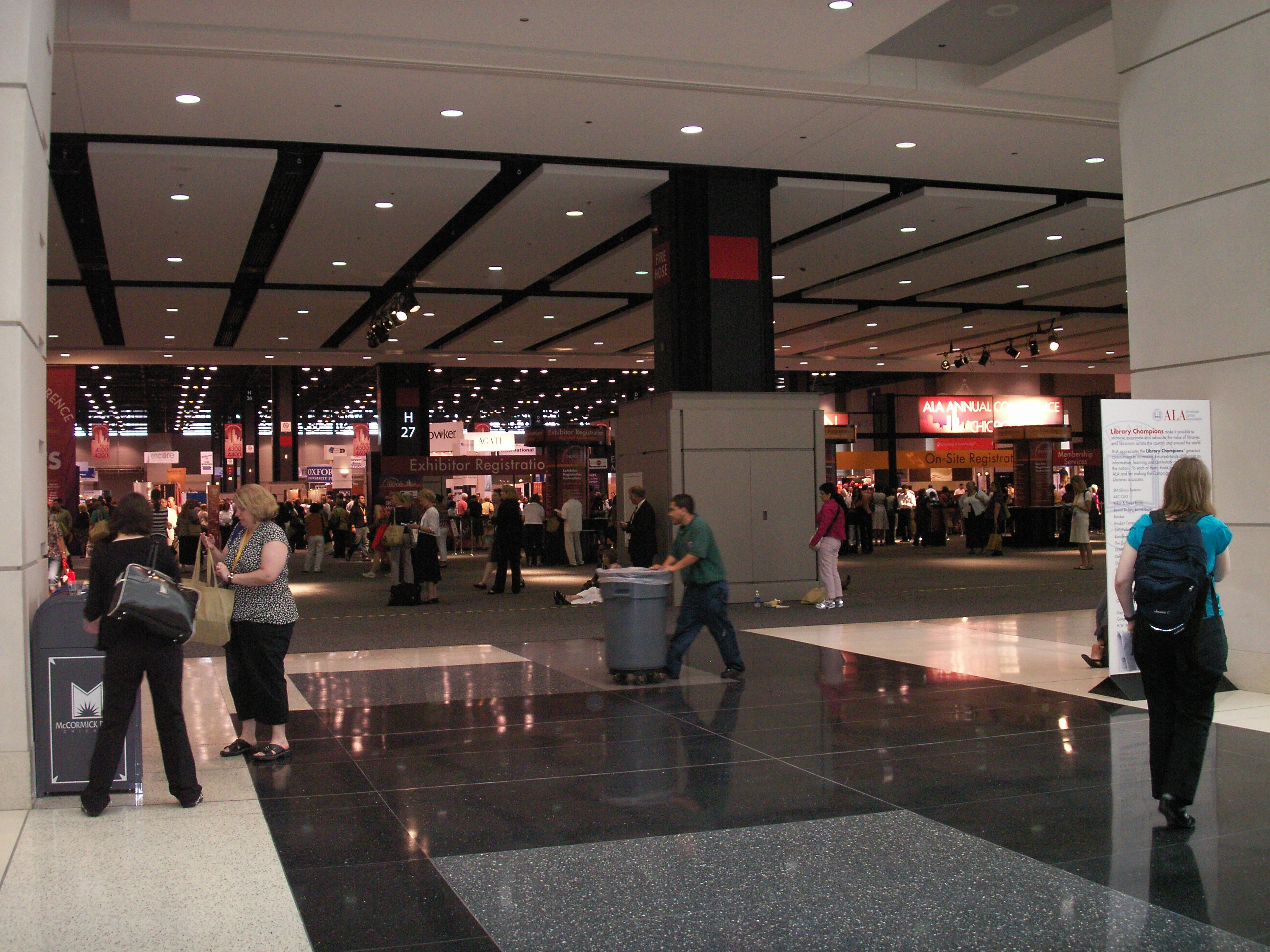 There was lots more that I didn’t cover. Have a look at www.ala.org, or www.ala.org/ala/conferencesevents/past/index.cfm for at least some of the presentations online.
And yeah I did go to the shops. I bought a new handbag because I chewed through my old one.

 Dr Lyn Robinson